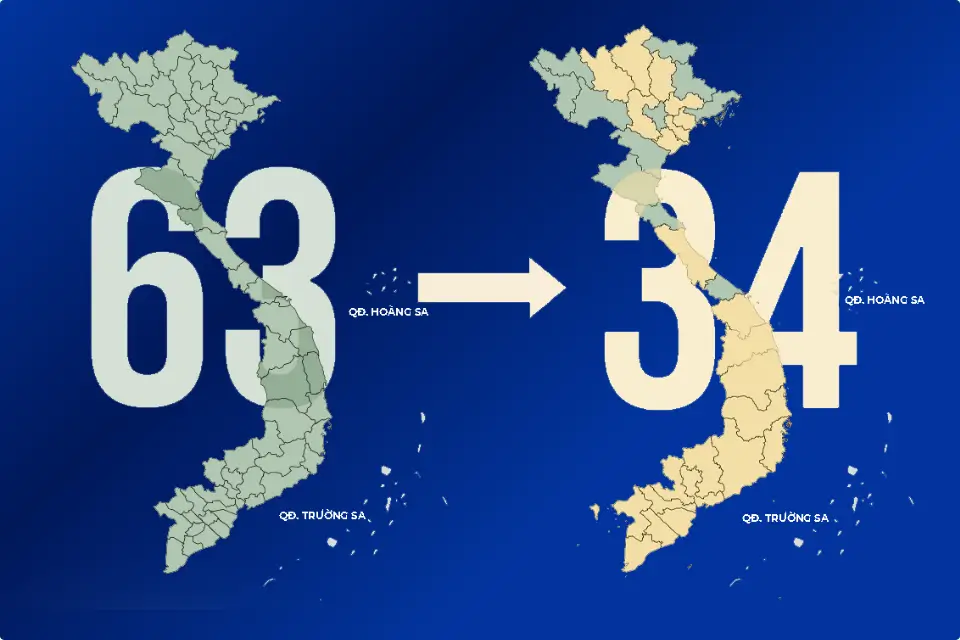
On June 12, 2025, Vietnam officially approved the merger of provincial administrative units, reducing the total from 63 to 34. Among them are 6 centrally governed cities and 28 provinces.
Which provinces remain unchanged and which ones have been merged or reorganized?
Since June 12, 2025, Vietnam has 34 provincial-level administrative units. Specifically:-
- 11 provinces and cities remain unchanged, including Hanoi, Hue, Lai Chau, Dien Bien, Son La, Lang Son, Quang Ninh, Thanh Hoa, Nghe An, Ha Tinh, and Cao Bang.
- The remaining 52 provinces and cities have been reorganized and merged into 23 new provincial-level units.

What provinces does Vietnam have after the merger?
In addition to the 11 provinces and cities that remain unchanged, below is the list of 23 new provinces and cities in Vietnam after the merger:
- Tuyen Quang (Tuyen Quang + Ha Giang)
- Lao Cai (Lao Cai + Yen Bai)
- Thai Nguyen (Bac Kan + Thai Nguyen)
- Phu Tho (Vinh Phuc + Phu Tho + Hoa Binh)
- Bac Ninh (Bac Ninh + Bac Giang)
- Hung Yen (Hung Yen + Thai Binh)
- Hai Phong City (Hai Duong + Hai Phong)
- Ninh Binh (Ha Nam + Ninh Binh + Nam Dinh)
- Quang Tri (Quang Binh + Quang Tri)
- Da Nang City (Da Nang + Quang Nam)
- Quang Ngai (Kon Tum + Quang Ngai)
- Gia Lai (Gia Lai + Binh Dinh)
- Khanh Hoa (Ninh Thuan + Khanh Hoa)
- Lam Dong (Lam Dong + Dak Nong + Binh Thuan)
- Dak Lak (Dak Lak + Phu Yen)
- Ho Chi Minh City (Ba Ria – Vung Tau + Binh Duong + Ho Chi Minh City)
- Dong Nai (Dong Nai + Binh Phuoc)
- Tay Ninh (Tay Ninh + Long An)
- Can Tho City (Can Tho + Soc Trang + Hau Giang)
- Vinh Long (Ben Tre + Vinh Long + Tra Vinh)
- Dong Thap (Tien Giang + Dong Thap)
- Ca Mau (Bac Lieu + Ca Mau)
- An Giang (An Giang + Kien Giang)
Two-tier local government model
n addition to the provincial mergers, Vietnam has also officially begun operating under a two-tier local government model: Provincial level (including provinces and centrally governed cities) and Commune level (including communes, wards, and special administrative zones under the provincial level)

Under this model, district-level local authorities will be abolished. Administrative procedures that were previously handled at the district level will be transferred to either the provincial level or the commune level, depending on the sector and jurisdiction.
ICAFAS's Recommendations
After the provincial mergers and the implementation of the two-tier local government model, there are several points you should keep in mind:
- District-level authorities may be merged or renamed.
- Administrative procedures that were previously handled at the district level may be transferred to either the provincial level or the commune level. You should stay updated with information from your local authorities to understand the correct procedures.
- In some cases, you may also need to update the new administrative place names on important documents such as your passport, national ID card, criminal record certificate, and other official documents.